
Simultaneous, consecutive, whispered, telephone and virtual interpretation each serve different settings. Choosing correctly protects time, accuracy and cost.
For event organisers, administrators, legal teams, healthcare providers and project managers choosing interpretation support, language is not a minor event detail or a final-stage document task. It is part of how people understand instructions, evaluate risk, make decisions, ask questions and build trust. When communication crosses languages, the quality of translation or interpretation directly affects how credible, inclusive and useful the message becomes.
Geo Mars Translation works in the space where language, culture, events, accessibility and communication technology meet. This makes the subject of choose the right interpretation mode important not only for search visibility, but also for real-world planning. Organisations that prepare language support early are more likely to deliver meetings, documents and content that audiences can actually use.
Why this matters
Many organisations know they need interpretation but do not know which mode fits the meeting. Choosing the wrong mode can slow the event, increase cost or reduce clarity.
The challenge is often bigger than vocabulary. A multilingual project may involve technical terms, legal wording, brand tone, community expectations, confidential information, audio quality, design constraints and accessibility needs. When any of these areas is ignored, the message can become weaker even when the intention is good.
That is why language support should be treated as a professional service with planning, process and quality control. The best results come when interpreters, translators, editors, AV technicians and event teams understand the same objective.
The professional solution
The right interpretation mode depends on audience size, venue, number of languages, meeting pace, privacy needs and whether participants are physical, mobile or remote.
A well-designed language solution does not simply move words from one language to another. It protects meaning. It helps speakers sound credible, helps audiences feel respected and helps organisations avoid avoidable misunderstanding. For SEO and online visibility, this is also useful because it allows service pages and blog content to answer real client questions around terms such as simultaneous interpretation, consecutive interpretation, whispered interpretation, tour guide interpretation system.
Where this service is most useful
This topic is especially relevant in:
- Large conferences
- Court-linked meetings
- Clinical consultations
- Guided tours
- Site visits
- Online meetings
In each of these settings, communication quality affects outcomes. A conference may need delegates to follow live discussion. A legal or medical setting may require precision. A corporate campaign may need tone and brand consistency. A public event may need accessibility and inclusion. The service should therefore be chosen according to the risk, audience, format and desired result.
Planning guidance for better results
Use simultaneous interpretation for large, time-sensitive sessions. Use consecutive interpretation for interviews and small formal exchanges. Use whispered interpretation for one or two delegates. Use tour-guide systems for mobile groups. Use telephone or virtual interpretation for remote access.
A practical planning checklist includes:
- Confirm the exact language pairs and whether interpretation is one-way or two-way.
- Share agenda, presentations, names, acronyms and sector terminology with the language team.
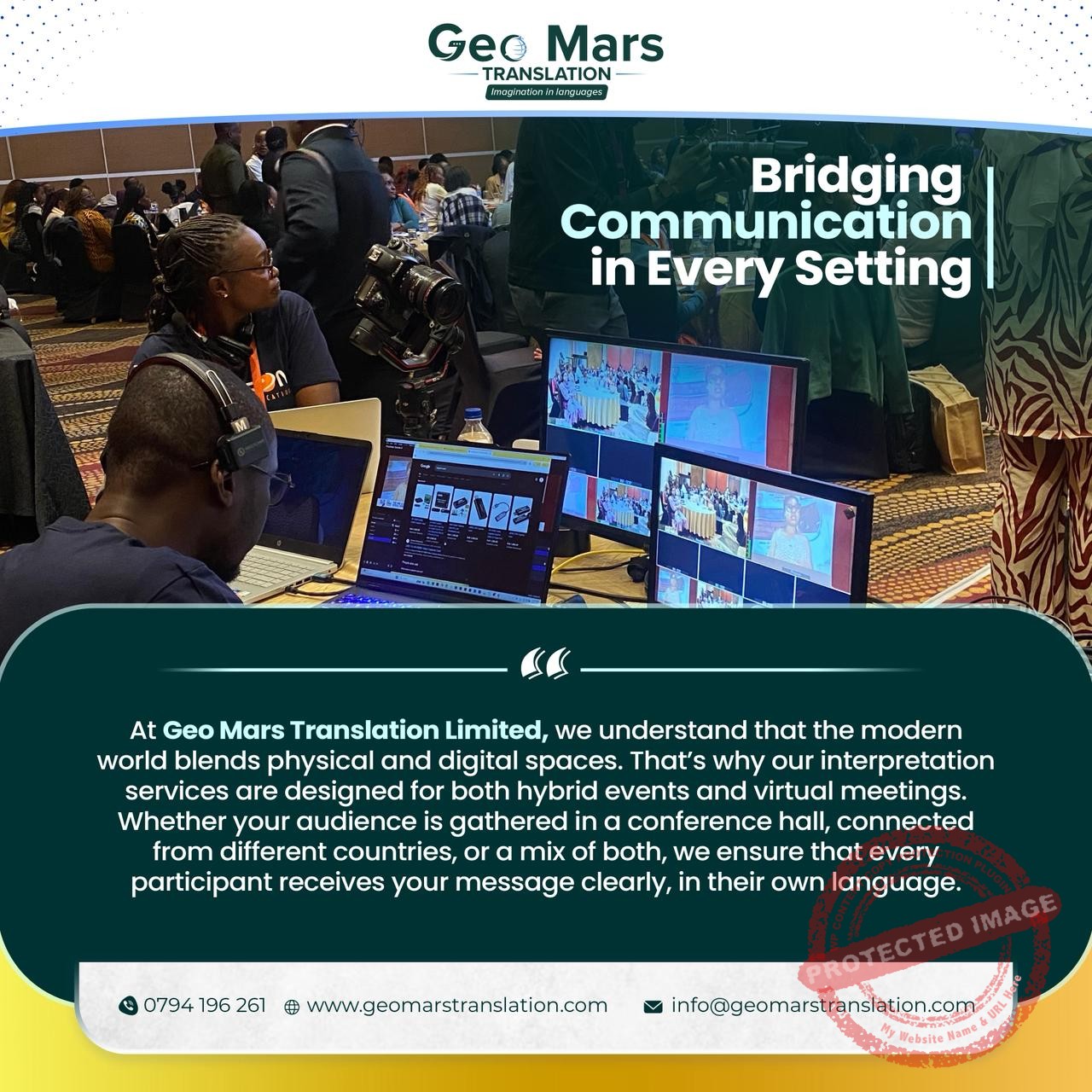
- Confirm whether the meeting is physical, virtual, hybrid or mobile.
- Test microphones, headsets, internet links, booths and audio channels before the session starts.
- Agree on confidentiality, recording permissions and post-event deliverables in advance.
For larger events, it is also important to run a technical rehearsal. For document projects, the equivalent is a file review before translation begins. The team should confirm file formats, word counts, layout expectations, certification needs and final delivery format.
Quality standards to insist on
A good interpretation plan balances accuracy, comfort and flow. It gives interpreters enough context and gives participants clear instructions on how to listen or respond.
Quality should be visible in the final experience. In a meeting, people should follow the discussion without confusion. In a translated document, the reader should feel that the text was written with care. In a video, captions or voiceover should feel natural. In an accessible format, the content should be easy to use and respectful of the audience.
Professional standards also include confidentiality, terminology control, cultural sensitivity, punctuality and responsive project management. These standards are especially important for legal, medical, financial, corporate and institutional communication.
Common mistakes to avoid
Avoid forcing one mode into every setting. A boardroom, factory tour, webinar and plenary conference may each require a different setup.
Another common mistake is choosing the cheapest option without considering the cost of failure. Poor interpretation can damage a high-level meeting. Weak translation can make a document unusable. Bad audio can ruin interpretation, transcription and livestreaming at the same time. The safer approach is to match the service level to the importance of the communication.
How Geo Mars Translation can support the project
Geo Mars Translation provides conference, face-to-face, telephone, virtual, whispered and sign language interpretation, as well as booths and tour-guide systems.
This combined capability is valuable because language needs rarely exist in isolation. A multilingual event may require interpretation, equipment rental, online broadcast support, recording, transcription and report translation. A campaign may require transcreation, voiceover, subtitling and design. A legal or medical project may require translation, review and confidentiality controls.
Final thoughts
Clear communication is a competitive advantage. It helps organisations serve diverse audiences, run better events, publish stronger documents and build relationships across countries and cultures. When language support is planned professionally, participants do not feel like outsiders to the conversation. They understand, respond and engage.
Call to action: Share your meeting format with Geo Mars Translation and receive guidance on the most suitable interpretation mode.
FAQs
What is simultaneous interpretation best for?
It is best for large conferences, plenary sessions and events where time must be protected.
When should I use whispered interpretation?
Use it when one or two participants need quiet language support without a full booth setup.
What is a tour-guide interpretation system?
It is a portable setup that lets groups hear an interpreter clearly while moving through a venue or site.